Every film begins with an idea, but an idea alone does not create a finished production. Turning a concept into a film requires planning, technical knowledge, creative decision-making, teamwork, and practical execution. Practical Filmmaking: Turning Creative Ideas into Real Projects explores how aspiring filmmakers can move beyond theoretical knowledge and learn to transform their creative concepts into complete visual stories. For students considering a Filmmaking Course, practical experience can be one of the most valuable parts of developing the skills needed for a career in the film industry.
The filmmaking process begins with developing an idea into a workable concept. Screenwriting, story structure, character development, shot planning, and visualisation help filmmakers determine how the story will be presented. Once the concept is established, pre-production brings the creative plan into reality through casting, location scouting, scheduling, budgeting, costume planning, production design, and preparation of equipment. Learning these stages gives students a clearer understanding of how much preparation happens before a camera starts recording.
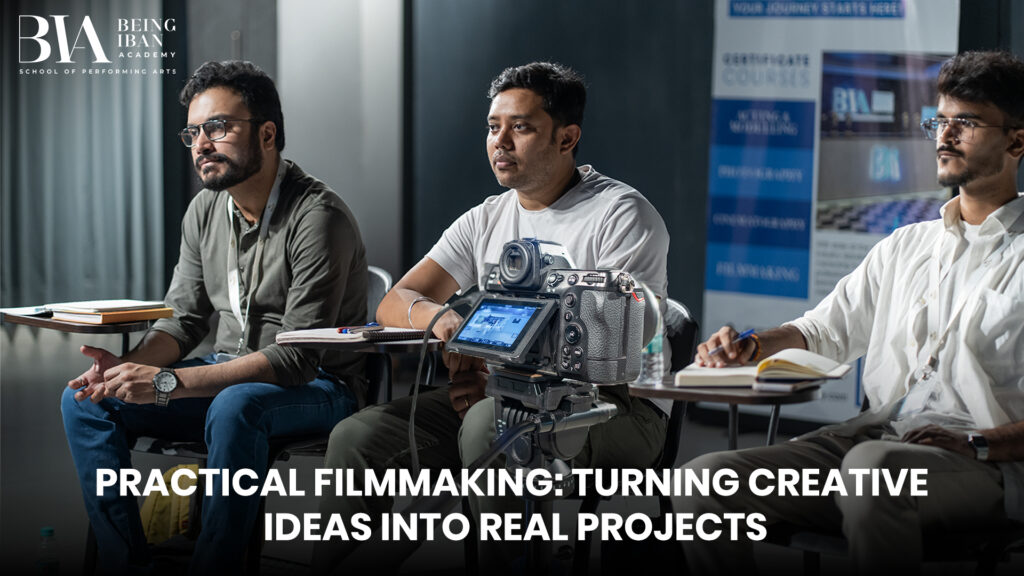
Practical Filmmaking: Turning Creative Ideas into Real Projects becomes especially meaningful when students get opportunities to work on actual productions. Handling a camera, setting up lighting, recording sound, planning shots, directing performers, and managing a shooting schedule can teach lessons that cannot always be gained through textbooks. Practical filmmaking also encourages students to solve unexpected problems, adapt to changing circumstances, and make creative decisions under real production conditions. At Being Iban Academy, hands-on learning can help aspiring filmmakers connect technical knowledge with real creative projects.
Post-production is another important part of turning an idea into a finished project. Editing allows filmmakers to select the strongest shots, establish pacing, shape emotions, and create continuity. Sound design, music, colour correction, and visual effects can further enhance the final production. Understanding this complete workflow helps students recognise that filmmaking is a collaborative process involving many specialised roles.
Ultimately, Practical Filmmaking: Turning Creative Ideas into Real Projects is about learning by doing. Every project provides an opportunity to experiment, make mistakes, receive feedback, and improve. A structured Filmmaking Course can introduce aspiring filmmakers to storytelling, cinematography, direction, production, and post-production while giving them opportunities to apply what they learn. With practical experience and guidance from experienced professionals such as Mr. Abhijit Chowdhury, students can begin developing the confidence and technical understanding required to turn creative ideas into meaningful films.