A powerful performance is created through more than words alone. The way a performer moves, speaks, reacts, and expresses emotions can determine how effectively a story connects with an audience. The Role of Movement, Voice and Expression in Performing Arts is therefore central to developing a complete and confident performer. Whether someone is interested in acting, theatre, dance, modelling, or other forms of performance, learning to control these three elements can help transform natural talent into a more refined performance ability.
Movement is one of the most important forms of non-verbal communication. Posture, gestures, facial reactions, walking patterns, and physical positioning can reveal a character’s personality and emotional state without requiring dialogue. Performers must learn to use movement purposefully rather than simply moving on stage or in front of a camera. Through Performing Arts Training, students can develop greater body awareness, coordination, stage presence, and control. These skills are particularly valuable for actors and dancers, while also benefiting models during runway and presentation work.
Voice gives performance its rhythm and emotional texture. Tone, pitch, volume, pronunciation, pace, pauses, and emphasis can completely change the meaning of a line. An actor delivering the same sentence with excitement, fear, anger, or sadness can create entirely different experiences for the audience. Developing vocal control through Acting Training and voice exercises can help performers speak with greater clarity and confidence. Strong voice techniques are especially useful in theatre, where performers need to communicate effectively with a live audience.
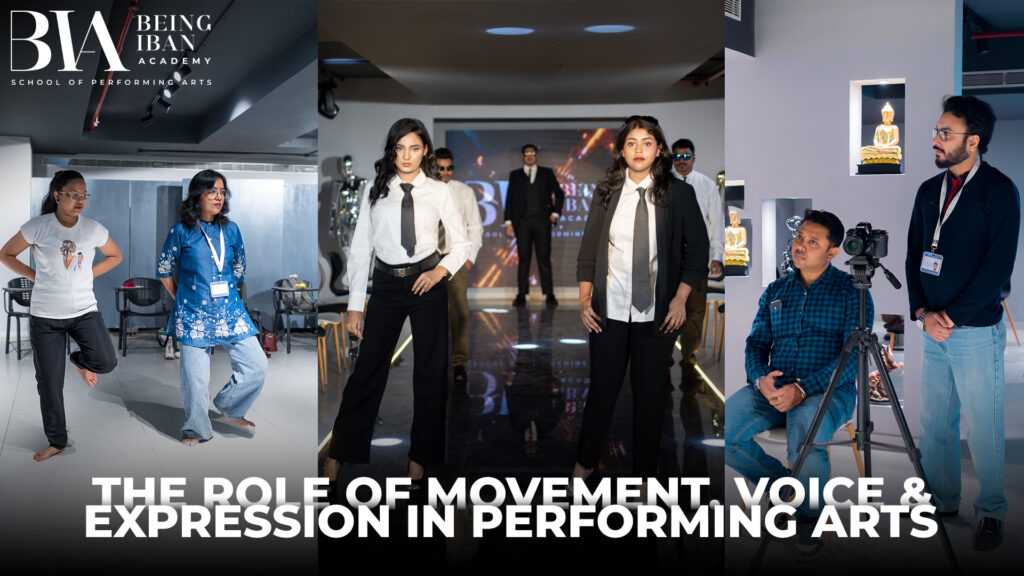
Expression connects movement and voice with emotion. Facial expressions, eye contact, reactions, and subtle changes in behaviour allow performers to communicate what their characters are experiencing internally. The Role of Movement, Voice and Expression in Performing Arts becomes particularly important when performers need to make an audience believe in a character or situation. At Being Iban Academy, practical performance activities can help learners explore these elements together and understand how they can strengthen their overall stage and camera presence.
Ultimately, The Role of Movement, Voice and Expression in Performing Arts is about creating performances that feel authentic, engaging, and emotionally convincing. These skills require regular practice, observation, feedback, and discipline rather than being mastered overnight. A structured Performing Arts Academy can provide aspiring performers with opportunities to practise these techniques in different situations. By developing movement, voice, and expression together, performers can become more versatile, confident, and prepared to pursue opportunities across the creative and entertainment industries.