Professional performance training helps aspiring performers develop the skills, practical experience, and preparation needed to manage nervousness and perform with greater confidence. Structured Performing Arts Training can help students become more comfortable with their abilities and professional environments while preparing them for different performance situations. Confidence plays a major role in the development of any performer. Whether stepping onto a stage, facing a camera, attending an audition, or presenting in front of an audience, performers need the ability to remain composed and express themselves naturally.
One of the most effective ways to develop confidence is through regular practice. Acting exercises, improvisation, voice training, movement activities, rehearsals, and camera-facing exercises allow performers to practise in a supportive environment. Repetition helps reduce hesitation and makes performance techniques more natural. As students become familiar with different exercises and situations, they can begin to trust their preparation rather than relying only on instinct. Regular practice also gives performers an opportunity to identify their strengths, recognise areas that need improvement, and gradually develop greater control over their performance.
Confidence is closely connected with communication and body language. An aspiring actor needs to communicate emotions through voice, facial expressions, gestures, posture, and movement, while a model needs to project confidence through walking, posing, facial expressions, and presentation. Personality Development and communication exercises can help performers become more aware of how they present themselves. Learning how to communicate effectively can make a significant difference during auditions, interviews, workshops, rehearsals, and professional interactions. These skills can also help performers feel more comfortable when meeting new people or working with creative teams.
Constructive feedback is another important part of professional performance training. Performers need opportunities to understand what they are doing well and where they can improve. Professional guidance can help students recognise their strengths while identifying specific areas that require further practice. Learning to accept feedback, make adjustments, and try again can develop resilience alongside confidence. Instead of viewing mistakes as failures, performers can learn to see them as opportunities to improve their skills. This mindset is particularly valuable in the entertainment industry, where auditions and creative opportunities may involve both success and rejection.
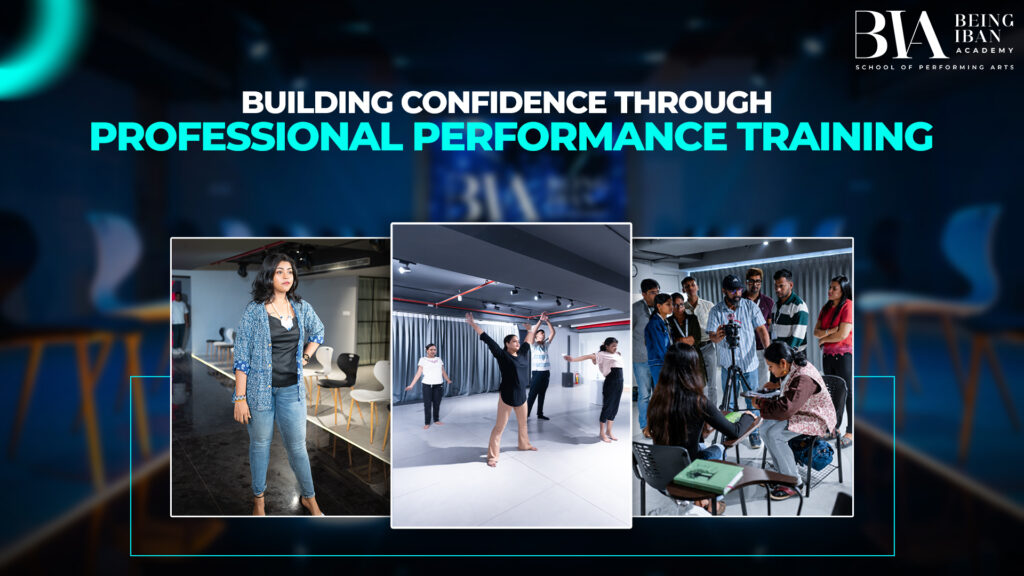
Practical experience also plays an important role in developing confidence. At Being Iban Academy, aspiring performers can have opportunities to develop their skills through rehearsals, performance activities, acting exercises, camera work, and other creative experiences. Such structured exposure can help students gradually become more comfortable performing in front of others while developing discipline and professional awareness. Practical training allows students to apply what they learn, experiment with different performance techniques, and understand how to respond to different situations. Over time, this experience can make unfamiliar performance environments feel more manageable.
Another important aspect of building confidence is learning how to prepare before a performance. Preparation may include understanding a script, developing a character, practising lines, working on expressions, improving voice control, or becoming familiar with camera and stage techniques. When performers know that they have prepared thoroughly, they may feel more secure in their abilities. Preparation does not remove every feeling of nervousness, but it can provide a stronger foundation for handling pressure and staying focused.
Confidence does not develop overnight. It is built through consistent practice, practical exposure, effective communication, constructive feedback, and professional guidance. Professional performance training can provide aspiring artists with a structured environment where they can develop these skills over time. With the right training and continued practice, performers can become more self-assured and expressive while learning how to approach auditions, performances, camera work, and other opportunities with greater preparation and professionalism. By developing both technical skills and personal confidence, aspiring performers can take meaningful steps toward their creative and professional goals.