Artificial intelligence is transforming the way digital content is planned, created, edited and distributed. From social media campaigns and marketing materials to photography, filmmaking, blogs and digital advertisements, AI-powered technologies are introducing new possibilities for creative professionals. AI Content Creation is becoming an important part of the modern digital industry, helping creators explore ideas, improve workflows and develop engaging content for different audiences.
As technology continues to advance, understanding how artificial intelligence works is becoming increasingly valuable for content creators, designers, filmmakers, photographers and digital marketers. AI is not simply changing the tools used by creative professionals; it is also influencing how they approach ideas, solve problems and communicate with audiences. AI Content Creation is helping creative professionals combine traditional skills with modern technology to develop more engaging digital experiences.
1. AI Is Making Content Creation More Efficient
One of the biggest advantages of artificial intelligence is its ability to simplify repetitive and time-consuming tasks. Content creators often spend considerable time researching topics, organising ideas, preparing drafts and editing materials. AI-powered applications can support many of these activities, allowing professionals to manage their workflows more efficiently.
Generative AI tools can help users brainstorm topics, prepare content calendars, draft articles, develop video scripts and explore different creative directions. They can also suggest headlines, generate caption variations and organise information into structured formats.
For example, a digital marketer planning a social media campaign can use AI to explore content ideas and prepare initial drafts for different platforms. A designer can experiment with visual concepts before developing the final artwork.
These applications demonstrate how AI Content Creation can reduce the time required for preliminary tasks. However, efficiency should not come at the expense of quality. Human creativity, editing and strategic thinking remain essential for producing content that communicates effectively. With the right approach, AI Content Creation can make everyday creative tasks more organised while giving professionals additional time to focus on originality.
2. AI Is Transforming Digital Marketing and Social Media
Digital marketing is one of the areas experiencing significant changes through artificial intelligence. Businesses increasingly rely on digital platforms to reach customers, communicate their brand identity and promote products or services. AI can support these activities by helping marketers understand audience behaviour and improve campaign planning.
AI-powered tools can analyse engagement patterns, identify content opportunities, suggest suitable posting times and generate variations of advertising copy. Marketers can also use these applications to adapt creative materials for different platforms and audience groups. Businesses can use AI Content Creation to develop platform-specific materials and maintain a consistent communication strategy across digital channels
An AI-Driven Digital Marketing Course can help learners understand how artificial intelligence fits into campaign planning, content optimisation, social media management and digital communication.
AI Content Creation also gives marketing teams new ways to develop and test campaign materials. However, successful marketing requires more than automated content production. Professionals must understand customer expectations, maintain brand consistency and create messages that connect with their intended audience.
3. AI Is Creating New Possibilities in Photography and Filmmaking
Photography and filmmaking are also being influenced by AI-assisted technologies. Modern creative workflows increasingly include tools for image enhancement, background removal, object selection, colour correction, transcription and video editing.
Generative image applications allow creators to experiment with visual concepts and explore different artistic directions. AI-assisted editing can simplify certain production activities, while automated transcription can make video content easier to organise and repurpose. The growing use of AI Content Creation is also encouraging photographers and filmmakers to experiment with new visual techniques and production methods.
For aspiring professionals exploring an AI Course for Creative Professionals, understanding how to combine these technologies with established creative techniques can be particularly valuable.
In filmmaking, AI can assist with early-stage visual development, script organisation and post-production tasks. In photography, intelligent editing features can help improve workflow efficiency and support creative experimentation.
The important distinction is that technology should support the creative vision rather than replace it. A strong understanding of composition, lighting, storytelling, editing and visual communication remains essential for successful AI Content Creation.
4. Generative AI Is Expanding Creative Possibilities
Generative AI is changing how people approach the development of digital content. Unlike traditional software that primarily helps users edit existing material, generative applications can produce new text, images, audio and other creative outputs based on user instructions.
This creates opportunities for experimentation across different creative disciplines. Designers can explore alternative visual styles, writers can develop initial concepts, and video creators can investigate new approaches to storytelling.
Developing Generative AI Skills can help creative professionals understand how to use these technologies effectively. This includes learning how to write clear prompts, evaluate generated results and refine outputs to meet a particular creative objective.
AI Content Creation can become more effective when creators understand how to guide generative tools instead of relying entirely on automated results. Generated material should be reviewed, improved and adapted so that the final work reflects the intended message and artistic direction. Learning AI Content Creation enables beginners to understand how generative applications can support their creative ideas and practical projects.
5. Human Creativity and AI Must Work Together
Although artificial intelligence can generate content and automate certain tasks, human creativity continues to play a central role in digital production.
AI systems can suggest ideas, identify patterns and produce variations, but they do not independently understand every cultural context, emotional nuance or audience expectation. Creative professionals bring personal experiences, imagination and judgement to the process.
For this reason, effective AI Content Creation Skills involve more than knowing how to operate software. They include:
- Creative thinking and original idea development.
- Prompt writing and clear communication with AI tools.
- Content editing and quality evaluation.
- Visual storytelling and design understanding.
- Research, fact-checking and critical thinking.
- Ethical awareness and responsible technology use.
Professionals who combine these abilities with technical knowledge can develop more effective creative workflows. Rather than relying entirely on automated outputs, they can use AI as an assistant while maintaining control over the final result. Effective AI Content Creation allows professionals to balance technological innovation with human imagination, ensuring that every project delivers meaningful value to its audience.
6. Responsible AI Use Is Becoming Essential
The growing use of AI also introduces important questions about accuracy, originality, copyright and privacy. AI-generated content may contain factual errors, visual inconsistencies or information that requires independent verification.
Creators must therefore review AI-generated material carefully before publishing it. They should also consider whether the tools they use handle personal information responsibly and whether generated assets comply with relevant copyright and licensing requirements.
Transparency is another important consideration. In certain professional settings, audiences or clients may need to understand when AI has played a significant role in producing content.
Responsible AI Content Creation requires a combination of technical knowledge and professional judgement. Learning how to identify limitations, verify information and improve generated outputs is just as important as learning how to create them. A responsible approach to AI Content Creation also involves checking the accuracy, relevance and originality of every final output.
7. AI Training Can Prepare Creative Professionals for Emerging Opportunities
As AI becomes increasingly integrated into creative industries, professionals who understand these technologies may be better prepared to adapt to changing workplace expectations.
Learning about AI Tools for Content Creators can also help individuals understand how different applications fit into content research, writing, visual development, editing and digital marketing.
The objective should not be to learn every new AI application that enters the market. Instead, learners should develop transferable skills that help them evaluate tools, solve creative problems and adapt to future developments.
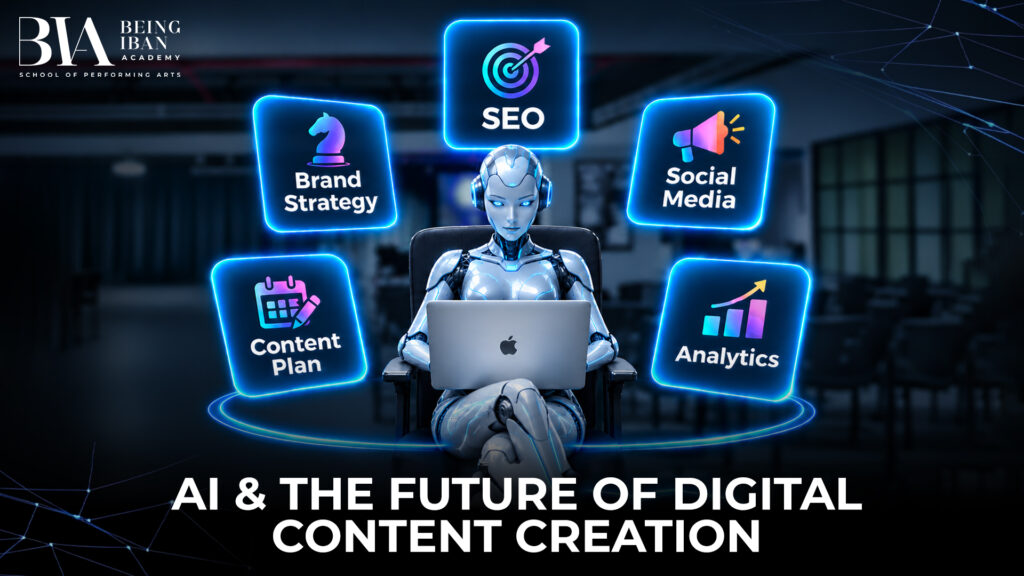
How to Prepare for the Future of Digital Content Creation
Preparing for an AI-driven creative industry requires a balanced approach to learning. Professionals should strengthen their existing creative abilities while gradually becoming familiar with relevant AI applications.
Here are some practical steps to consider:
- Build strong creative foundations: Develop knowledge of writing, graphic design, photography, filmmaking or digital marketing.
- Explore relevant AI applications: Identify tools that support your chosen creative discipline.
- Practise prompt writing: Learn how to communicate instructions clearly to achieve more useful results.
- Develop editing skills: Review, refine and improve AI-generated content rather than accepting the first output.
- Understand responsible AI practices: Pay attention to accuracy, privacy, copyright and transparency.
- Create practical projects: Apply your knowledge to portfolios, campaigns, videos, designs or other creative assignments.
- Continue learning: Keep exploring new developments and adapt your workflow as technology changes.
These steps can help aspiring professionals build confidence and develop a more adaptable approach to digital content production.
Conclusion
AI Content Creation is shaping the future of digital media by introducing new ways to explore ideas, streamline production activities and experiment with creative possibilities. At the same time, originality, emotional understanding, storytelling and critical judgement remain essential qualities of successful content creation.
Professionals who develop strong AI-related abilities alongside their existing creative skills can approach the changing digital landscape with greater confidence. By learning how to use artificial intelligence thoughtfully, they can build efficient workflows, explore innovative ideas and create content that is both engaging and meaningful.
By adopting AI Content Creation techniques, professionals can improve their creative workflows while maintaining originality, quality and a strong connection with their audiences. The future of digital creativity is not simply about allowing machines to produce more content. It is about using technology intelligently to support human ideas and bring stronger creative visions to life.