Artificial intelligence is transforming how creative professionals develop ideas, produce content, and bring their imagination to life. From digital artwork and photography to filmmaking, advertising, and social media, AI-powered tools are becoming part of modern creative workflows. Understanding AI in the creative industry can help aspiring professionals adapt to new opportunities, explore innovative techniques, and develop skills that complement their creativity.
Although AI can automate certain tasks and generate new ideas, human imagination, emotional understanding, and originality remain essential. The most effective creative workflows combine technology with human judgement and artistic direction.
1. Generative AI Tools for Creative Ideas
Generative AI tools help designers, writers, photographers, and filmmakers explore ideas more efficiently. They can generate initial concepts, suggest visual styles, develop content outlines, and create references for creative projects.
Using AI in the creative industry can make brainstorming more flexible by allowing professionals to experiment with different approaches before choosing a final direction. However, AI-generated suggestions usually require human review, refinement, and creative judgement to meet a project’s goals.
2. AI in Photography and Image Editing
Artificial intelligence is changing photography through features such as background removal, image enhancement, object selection, and automated editing. These tools can simplify time-consuming tasks and help photographers experiment with visual effects.
For aspiring photographers, learning about AI in the creative industry should complement traditional photography skills such as lighting, composition, framing, and visual storytelling. Understanding when to use AI and when to rely on manual editing can help photographers maintain creative control and produce consistent results.
3. AI in Filmmaking and Video Production
AI-powered tools can support different stages of filmmaking, including script development, storyboarding, video editing, subtitle generation, and certain visual effects processes. These applications can help creators test ideas and organise production workflows.
Independent filmmakers may find these tools useful when working with limited budgets or resources. Nevertheless, AI in the creative industry does not remove the importance of storytelling, directing, performance, sound design, and editing decisions. Human creativity remains central to producing engaging films.
4. AI for Digital Marketing and Content Creation
Digital marketers and content creators can use AI to brainstorm campaign ideas, prepare content outlines, adapt messages for different platforms, and analyse audience trends. These applications can support content planning and help teams work more efficiently.
However, effective marketing still depends on understanding the target audience, maintaining brand consistency, and creating original messages. Applying AI in the creative industry responsibly means checking facts, reviewing generated content, and ensuring that the final message reflects the brand’s values.
5. AI in Graphic Design and Visual Communication
Graphic designers can use AI-assisted tools to explore layouts, develop visual concepts, generate design references, and speed up repetitive production tasks. These capabilities can support experimentation during the early stages of a project.
Designers must still consider typography, colour theory, accessibility, visual hierarchy, and the client’s requirements. AI in the creative industry works best when technology supports the designer’s decisions rather than replacing the thought and purpose behind a design.
6. Personalisation and Audience Experiences
AI can help creative businesses adapt content to different audiences by analysing preferences, engagement patterns, and other available data. For example, digital campaigns may use audience insights to test different messages or recommend relevant content.
Personalisation can make communication more useful, but it should respect privacy and avoid misleading audiences. Creative professionals should understand how data is collected and used before relying on AI-driven recommendations.
7. New Skills for Creative Professionals
As AI tools become more common, creative professionals may benefit from developing new technical and analytical skills alongside their existing abilities. Prompt writing, AI-assisted editing, content evaluation, and digital workflow management can help individuals use these tools more effectively.
Learning about AI in the creative industry also involves recognising the limitations of generated content, checking accuracy, and making informed decisions about when AI is appropriate. Continuous learning can help aspiring professionals adapt as tools and industry expectations evolve.
8. Copyright, Ethics, and Responsible AI Use
AI creates important questions about copyright, consent, originality, privacy, and the ownership of creative work. The legal rules surrounding AI-generated material can vary by jurisdiction and situation, so professionals should not assume that every generated output is free from restrictions.
Before using AI-generated images, text, music, or video commercially, creators should review the relevant tool’s terms, check applicable rights, and obtain permission when required. Responsible use of AI in the creative industry also means avoiding deceptive content, respecting people’s likenesses, and being transparent when disclosure is appropriate.
9. Learning Generative AI for Creative Careers
People interested in design, photography, filmmaking, and digital marketing can benefit from learning how AI tools fit into real creative workflows. A structured learning programme can provide opportunities to understand the technology, practise different applications, and evaluate the results.
For learners considering a Generative AI Course in Kolkata, it is useful to look for practical exercises, responsible AI guidance, and examples relevant to their chosen field. At Being Iban Academy, the GenPro programme is associated with learning about generative AI. Prospective students should review the current curriculum to confirm which tools and creative applications are covered.
Developing AI skills alongside communication, critical thinking, and creative fundamentals can help learners make informed use of emerging technology without losing sight of originality and human expression.
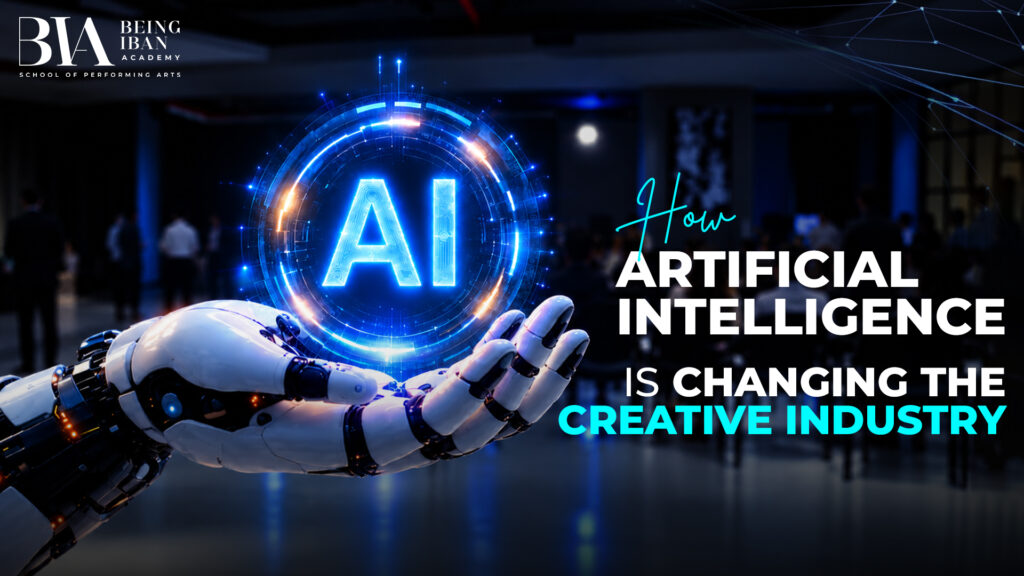
Conclusion: The Future of AI in the Creative Industry
AI in the creative industry is changing how professionals brainstorm, design, edit, produce, and distribute creative work. From photography and filmmaking to graphic design and digital marketing, AI tools can support experimentation and improve selected parts of the creative process.
The future will depend not only on learning new tools but also on using them thoughtfully. By combining technical knowledge with imagination, ethical awareness, and strong creative fundamentals, professionals can explore new possibilities while maintaining the human perspective that makes creative work meaningful.