Academic achievements are important, but a child’s development involves much more than examination results and classroom performance. Children also need to express their ideas, interact with others, manage challenges, and make independent decisions. Developing confidence and communication skills for kids can help them navigate everyday situations, build positive relationships, and prepare for future opportunities.
Confidence encourages children to participate in new experiences, while communication helps them express their thoughts and understand others. By supporting these abilities alongside academic learning, parents can help children develop essential life skills that benefit them at school, at home, and beyond.
1. Build Confidence Through Everyday Experiences
Confidence allows children to try new activities, ask questions, and express opinions without being held back by the fear of making mistakes. A confident child may feel more comfortable joining group activities, sharing ideas in class, or making new friends.
Parents can strengthen confidence and communication skills for kids by encouraging small, achievable challenges. Let children introduce themselves to others, explain their favourite activities, or make age-appropriate choices. Recognising their effort rather than expecting perfection helps children understand that mistakes are a natural part of learning.
2. Improve Communication Through Daily Conversations
Everyday conversations provide valuable opportunities for children to practise expressing themselves. Parents can ask open-ended questions about school, hobbies, friendships, and daily experiences.
Strong communication skills help children explain their needs, describe their feelings, and listen to different perspectives. To improve confidence and communication skills for kids, parents should listen patiently, avoid interrupting, and encourage children to complete their thoughts.
These simple habits can help children feel heard and become more comfortable sharing their opinions in different situations.
3. Develop Emotional Awareness and Self-Expression
Children who can identify and communicate their emotions may find it easier to seek help, explain problems, and manage disagreements. Emotional awareness also helps them understand how their words and actions affect other people.
Parents can encourage children to talk about how they feel after a challenging experience. Storybooks, role-play, and everyday examples can help children understand emotions and practise responding respectfully.
Developing confidence and communication skills for kids includes teaching them that it is acceptable to express feelings while respecting the feelings and boundaries of others.
4. Strengthen Social Skills and Friendships
Social skills help children build friendships, participate in group activities, and cooperate with others. Learning to take turns, share ideas, listen carefully, and resolve disagreements can improve their interactions with classmates and family members.
Parents can encourage cooperative games, group projects, and playdates that allow children to practise these abilities naturally. When disagreements occur, guide children towards explaining their perspectives and listening to others rather than immediately solving every problem for them.
These experiences support confidence and communication skills for kids by helping them become more comfortable in social environments.
5. Use Creative Activities to Encourage Expression
Creative activities give children opportunities to explore ideas, develop imagination, and communicate in different ways. Storytelling, drawing, role-play, group discussions, and performing arts can make learning enjoyable.
Drama classes for kids and kids acting classes may provide structured opportunities to practise voice control, body language, teamwork, and self-expression. Children can explore different roles and situations while gradually becoming more comfortable speaking in front of others.
Creative learning can complement confidence and communication skills for kids by encouraging participation without making every activity feel like a test.
6. Practise Public Speaking and Presentation Skills
Speaking in front of a group can feel challenging for some children. Short presentations, storytelling, reading aloud, and show-and-tell activities can help them practise in a supportive environment.
Start with familiar topics and small audiences before introducing longer presentations. Encourage children to organise their ideas, speak clearly, and pause when they need time to think.
Public speaking classes for kids and suitable confidence-building activities can offer additional practice. The goal is not to eliminate every sign of nervousness but to help children communicate their ideas despite feeling uncertain.
7. Encourage Independence and Decision-Making
Independence develops when children have opportunities to make age-appropriate decisions and take responsibility for their choices. Simple tasks, such as organising school materials, choosing an activity, or explaining a preference, can help children develop self-belief.
Parents can offer guidance without taking control of every situation. Ask children to consider possible solutions when they face a manageable problem and encourage them to explain why they made a particular choice.
Building confidence and communication skills for kids also means helping them ask questions, express preferences respectfully, and learn from feedback.
8. Prepare Children for Future Opportunities
As children grow older, confidence and communication become increasingly useful in school presentations, group projects, extracurricular activities, interviews, and professional environments.
Children who practise active listening, clear expression, teamwork, and problem-solving can develop skills that complement their academic knowledge. Parents can support this growth by encouraging participation in clubs, creative projects, sports, and other age-appropriate activities.
A balanced approach to confidence and communication skills for kids helps children prepare for different experiences without placing unnecessary pressure on academic performance or public achievement.
9. Support Personality Development Beyond Academics
A child’s development should include academic learning as well as communication, emotional awareness, confidence, and social interaction. A personality development course for kids in Kolkata may complement school education by offering structured opportunities to practise these practical life skills.
Combining guided activities with regular encouragement at home can help children practise what they learn and gradually become more comfortable expressing themselves.
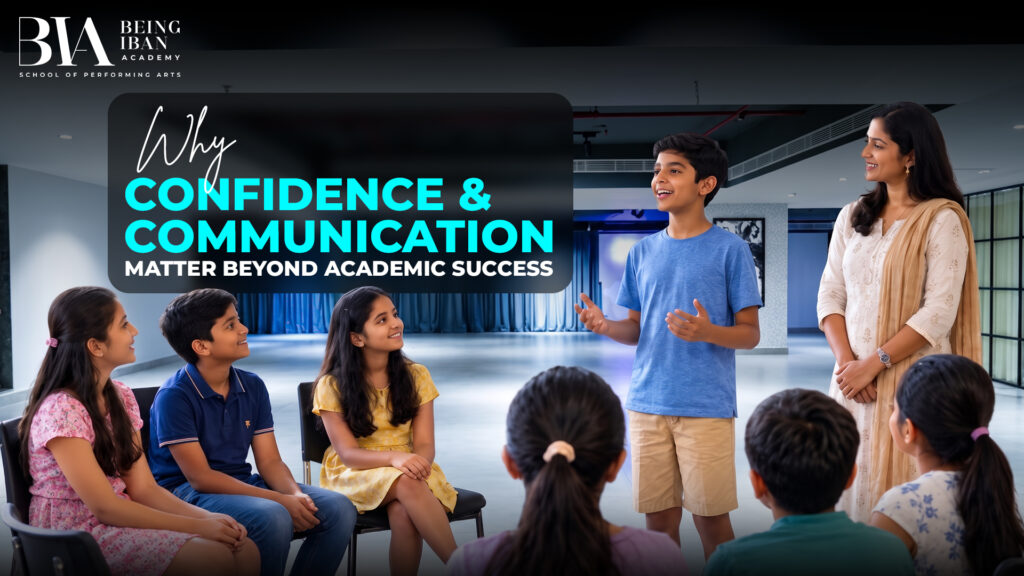
Conclusion: Help Children Grow With Confidence
Developing confidence and communication skills for kids is an important part of preparing children for life beyond examinations. Confidence helps them approach new experiences, while communication enables them to express ideas, understand others, and build meaningful relationships.
Parents can support this development through everyday conversations, creative activities, public speaking practice, and opportunities for age-appropriate independence. Progress may happen gradually, so patience and encouragement are essential.
Explore Being Iban Academy to learn more about its approach to children’s development and available programmes. By nurturing confidence and communication skills for kids alongside academic learning, parents can help children grow into capable, thoughtful, and self-assured individuals.