Photography combines technical expertise, creativity, observation, and storytelling. However, as client expectations and digital content demands continue to grow, photographers need smarter ways to improve their workflow. Generative AI for Photographers offers new opportunities to simplify repetitive tasks, explore creative ideas, and enhance the photography process without losing the artistic vision that makes each image unique.
By understanding how Generative AI for Photographers works, aspiring and professional photographers can discover practical ways to improve editing, plan photoshoots, and experiment with new visual concepts. From AI-powered editing to creative planning, these tools can help photographers work more efficiently while keeping their artistic judgement at the centre of every image.
1. Speed Up Photo Editing and Retouching
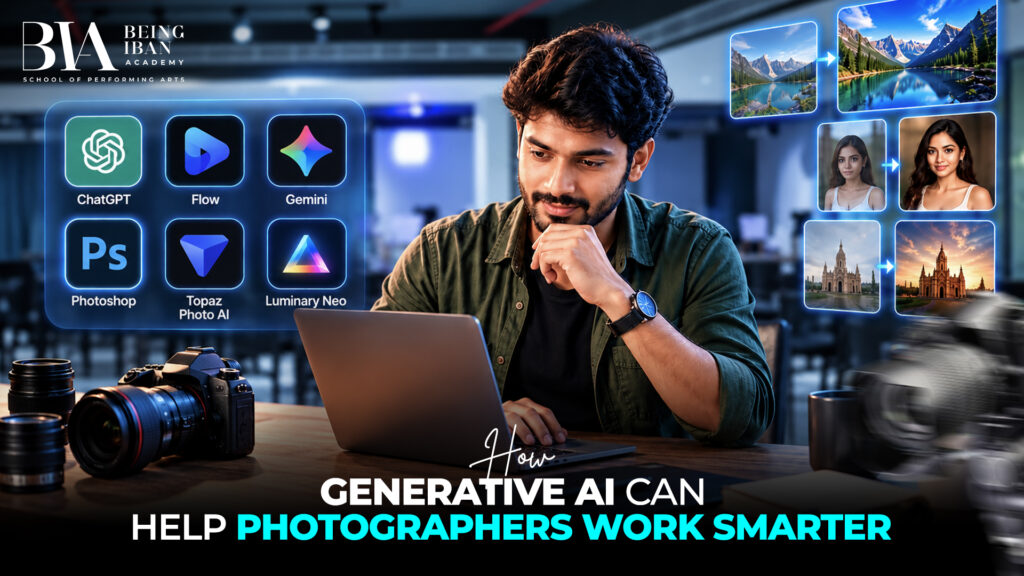
One of the biggest advantages of Generative AI for Photographers is the ability to simplify time-consuming editing tasks. Photographers can use AI-powered features to remove unwanted objects, extend backgrounds, and refine selected areas of an image. These capabilities help reduce repetitive work while allowing photographers to focus on creative quality and visual storytelling.
Photo editing is an essential part of professional photography, but it can also be time-consuming. Photographers often spend hours adjusting images, removing unwanted objects, retouching portraits, and correcting backgrounds.
Generative AI tools can simplify several of these tasks. Depending on the software, photographers can remove distracting elements, extend image backgrounds, repair selected areas, and create alternative visual treatments. These features help reduce repetitive editing work and free up time for more creative decisions.
However, AI-generated edits should always be reviewed carefully. Photographers need to check details such as skin texture, lighting consistency, edges, and shadows to ensure the final image looks natural and professional. Generative AI for Photographers also helps simplify complex editing tasks, making it easier to maintain consistent results across multiple images.
Key benefit: Faster editing workflows with more time for creative refinement.
2. Plan Photoshoots With AI-Generated Ideas
Planning a photoshoot involves developing concepts, selecting locations, choosing colour palettes, and communicating a visual direction to clients. Generative AI can help photographers explore these ideas before the actual shoot begins.
For example, photographers can use AI tools to brainstorm fashion photography concepts, product photography backgrounds, portrait themes, or campaign visuals. They can also generate written descriptions of lighting setups and visual styles to support their planning process.
These ideas can be organised into mood boards and shared with clients or creative teams. This makes it easier to discuss expectations and establish a consistent creative direction before investing time and resources in production.
AI-generated references should remain planning aids rather than substitutes for real-world testing, photography experience, and original creative judgement. For busy professionals, Generative AI for Photographers can make everyday photography workflows more manageable and productive.
Generative AI for Photographers can also support the creative planning process. Photographers can explore mood-board concepts, colour combinations, lighting ideas, and potential backgrounds before a shoot. These visual references help communicate ideas to clients and creative teams while making photoshoot preparation more organised and efficient.
Key benefit: Better preparation, clearer communication, and more organised photoshoots.
3. Improve Workflow Efficiency
Professional photographers often manage hundreds or thousands of photographs from a single assignment. Reviewing files, organising folders, responding to client feedback, and preparing revisions can consume a significant amount of time.
AI-assisted photography software can support parts of this workflow through features such as image selection, subject recognition, automatic adjustments, and editing suggestions. Some tools can also help photographers prepare captions, organise project notes, or draft client communications.
The best approach is to identify repetitive tasks that do not require complex creative judgement and explore whether AI can handle them efficiently. Photographers should still inspect selected images and maintain control over final delivery. Learning how to use Generative AI for Photographers alongside traditional techniques can help creative professionals stay adaptable in a changing industry.
Using Generative AI for Photographers can help streamline selected parts of a professional workflow. Depending on the software, AI-assisted tools may support image selection, editing suggestions, and other repetitive tasks. Photographers should review the results carefully to maintain image quality and consistency.
Key benefit: More efficient project management and less time spent on repetitive tasks.
4. Explore Creative Backgrounds and Visual Concepts
Generative AI for photographers can open up new possibilities for creative experimentation. Photographers working in advertising, fashion, product photography, or digital campaigns can explore alternative backgrounds and visual concepts during the development stage.
For instance, a product photographer might experiment with different scene concepts before arranging a physical set. A portrait photographer could explore colour schemes or artistic environments to discuss possible directions with a client.
These experiments can help creative teams compare ideas and make decisions earlier in the process. Nevertheless, generated elements should be evaluated for realism, visual consistency, and suitability for the intended audience.
Photographers must also distinguish between conceptual images and final photographs, particularly when clients expect an image to represent a real product, person, or event accurately.
Another benefit of Generative AI for Photographers is the freedom to experiment with different visual directions. From product backgrounds to conceptual portrait settings, AI-generated ideas can help photographers explore creative possibilities before committing to a final composition.
Key benefit: Greater creative flexibility and faster visual experimentation.
5. Strengthen Client Presentations and Communication
Successful photography depends on more than taking good pictures. Photographers must also explain concepts, present proposals, understand client requirements, and communicate revisions clearly.
Generative AI for photographers can assist them with preparing mood-board descriptions, project proposals, creative briefs, and presentation outlines. They can also help photographers turn rough ideas into structured explanations that clients can understand more easily.
For commercial assignments, these materials can support discussions about styling, lighting, composition, and the intended visual outcome. Photographers should review all AI-generated text and ensure that the final proposal reflects their actual capabilities and the client’s requirements.
Generative AI for Photographers can assist with preparing creative briefs, mood-board descriptions, and client presentations. These tools help photographers explain visual concepts more clearly, organise proposals, and communicate project ideas more effectively.
Key benefit: Clearer presentations and more effective communication with clients.
6. Develop Professional Photography Skills Alongside AI
Although Generative AI for photographers can simplify certain tasks, they cannot replace the fundamental knowledge needed to create strong photographs. Understanding exposure, aperture, shutter speed, ISO, composition, lighting, and lens selection remains essential for photographers.
These professional photography skills help artists assess whether an AI-generated edit is visually convincing or whether it introduces inconsistencies. A strong understanding of photography also makes it easier to direct shoots, troubleshoot technical problems, and maintain a consistent style.
Aspiring photographers can benefit from combining practical camera training with an understanding of emerging creative technologies. A Photography Course in Kolkata can provide a foundation in camera operation, lighting, composition, and visual storytelling while helping learners prepare for the demands of the creative industry.
At Being Iban Academy, the FocusX photography programme and GenPro’s generative AI learning focus represent complementary approaches to developing creative and technical capabilities.
Although Generative AI for Photographers can improve efficiency, it cannot replace practical knowledge of lighting, exposure, composition, and camera settings. Combining AI knowledge with professional photography skills helps photographers evaluate generated results and make better creative decisions.
Key benefit: A stronger foundation for using AI effectively without depending on it for every creative decision.
7. Use Generative AI Responsibly
As AI-generated imagery becomes more common, responsible use is increasingly important. Photographers should understand the potential implications of copyright, consent, privacy, and image authenticity before incorporating generated content into their work.
For example, photographers should obtain appropriate permission before using identifiable client images with AI services and review the privacy policies of the tools they choose. Commercial photographers should also clarify whether AI-generated elements are permitted under the client’s requirements.
Transparency is particularly important when an image could mislead an audience. Altering a product’s appearance, generating elements that were not present at an event, or presenting synthetic imagery as an unedited photograph can create trust and reputational issues.
Photographers should establish clear guidelines for AI use, check the terms of the software they use, and communicate significant alterations when relevant.
Key benefit: Greater client trust, responsible creative practice, and better protection of professional credibility.
Why Generative AI Skills Matter for Modern Photographers
The photography industry continues to evolve as digital tools create new ways to produce, edit, and distribute visual content. Learning how to use AI effectively can help photographers adapt to changing workflows while finding new opportunities for creative experimentation.
However, the most valuable approach is to combine technological knowledge with artistic judgement. AI can suggest possibilities, automate selected tasks, and support planning, but photographers remain responsible for the quality, authenticity, and purpose of their final images.
Developing Generative AI Skills alongside professional photography knowledge can help aspiring and experienced photographers make informed decisions about which tools to use and when human expertise matters most. As photography continues to evolve, Generative AI for Photographers provides new ways to balance creative experimentation with efficient production.
Conclusion
Ultimately, Generative AI for Photographers is most valuable when it supports rather than replaces creative expertise. By combining AI tools with technical photography knowledge and responsible decision-making, photographers can improve their workflow, explore fresh ideas, and produce images that reflect their individual artistic vision.
Generative AI for photographers is becoming a useful part of modern creative workflows. From speeding up photo editing and planning photoshoots to improving presentations and exploring new visual concepts, these tools can help photographers manage their time and expand their creative options.
The key is to use AI as a supporting technology rather than a replacement for photography fundamentals. By combining technical expertise, artistic vision, responsible decision-making, and practical AI knowledge, photographers can work more efficiently while producing images that reflect their unique perspective.