Becoming a successful performing artist requires more than talent and enthusiasm. Whether the goal is to act on stage, perform in front of a camera, walk the runway, dance professionally, or explore multiple creative disciplines, performers need a strong set of technical and interpersonal skills. Performance Techniques Every Aspiring Performing Artist Should Master include voice control, body language, emotional expression, improvisation, movement, and stage presence. Learning these techniques through structured Performing Arts Training can help aspiring artists become more confident, versatile, and prepared for professional opportunities.
Voice control is one of the most important performance techniques an artist can develop. Tone, pitch, pace, pronunciation, pauses, and volume can completely change the way an emotion or message is communicated. Actors need vocal control for dialogue delivery, while stage performers must ensure that their voices remain clear and expressive for an audience. Regular voice exercises can improve clarity and confidence while helping performers develop greater control over their delivery.
Body language is equally important because performance is not limited to spoken words. Posture, gestures, facial expressions, eye contact, walking style, and physical reactions can communicate emotions and personality. Performance Techniques Every Aspiring Performing Artist Should Master therefore include developing awareness of how the body responds to different situations. This is particularly useful for actors, models, dancers, and presenters who need to communicate effectively even without dialogue. At Being Iban Academy, practical exercises can help students become more comfortable using their bodies as an expressive tool.
Improvisation is another essential skill. Performers cannot always predict what will happen during an audition, rehearsal, live performance, or production. Improvisation encourages quick thinking, spontaneity, listening, and adaptability. It also helps performers move beyond memorised responses and react naturally to their surroundings. Alongside improvisation, emotional expression and character understanding allow performers to create performances that feel authentic rather than rehearsed.
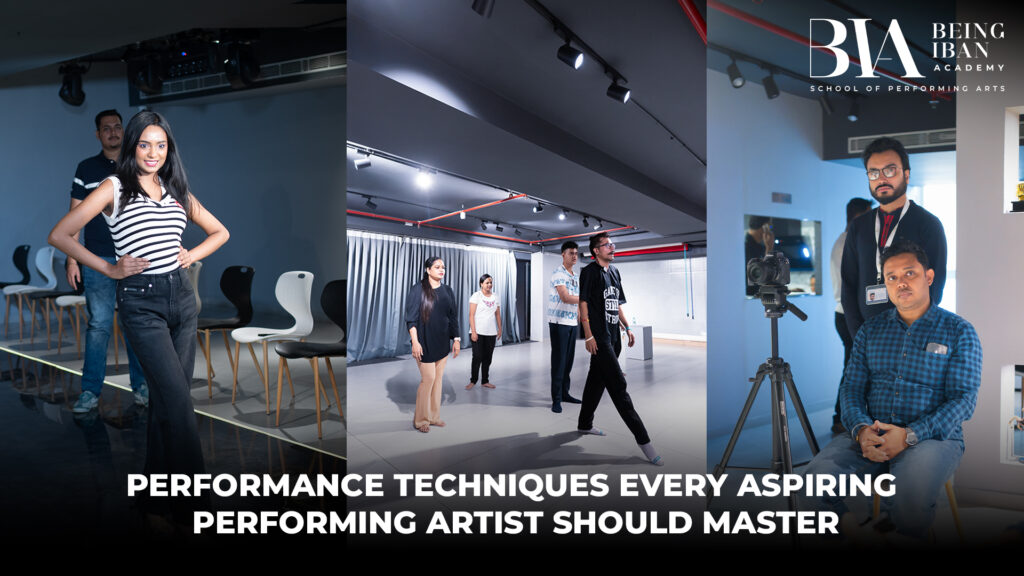
Stage presence brings many of these skills together. Confidence, focus, movement, timing, and audience awareness can determine how effectively a performer holds attention. Professional Performing Arts Training can provide opportunities to practise these abilities through performances, workshops, scene work, dance exercises, camera sessions, and other practical activities. Guidance from experienced mentors can further help students understand how to refine their individual strengths.