Talent can open the door to a creative career, but professional training can provide the skills, discipline, and confidence needed to move forward. In an increasingly competitive entertainment industry, aspiring actors, models, dancers, filmmakers, and performers need more than natural ability. They need to understand their craft, develop professional habits, and learn how to perform effectively in different situations. The Role of Professional Training in Building a Performing Arts Career becomes particularly important for individuals who want to transform their passion into a structured and sustainable career. A Performing Arts Academy can provide the right environment for learners to develop their abilities through guided practice and industry-focused learning.
One of the most important benefits of Professional Training is that it helps performers understand the fundamentals of their chosen discipline. Actors can learn voice modulation, expressions, improvisation, character development, and camera techniques, while aspiring models can work on ramp walking, posture, grooming, and presentation. Dancers can develop technique, rhythm, coordination, and stage presence. Such structured learning allows students to identify areas that need improvement instead of relying only on instinct. For someone considering an Acting Course in Kolkata, professional guidance can make the process of learning acting more focused and purposeful.
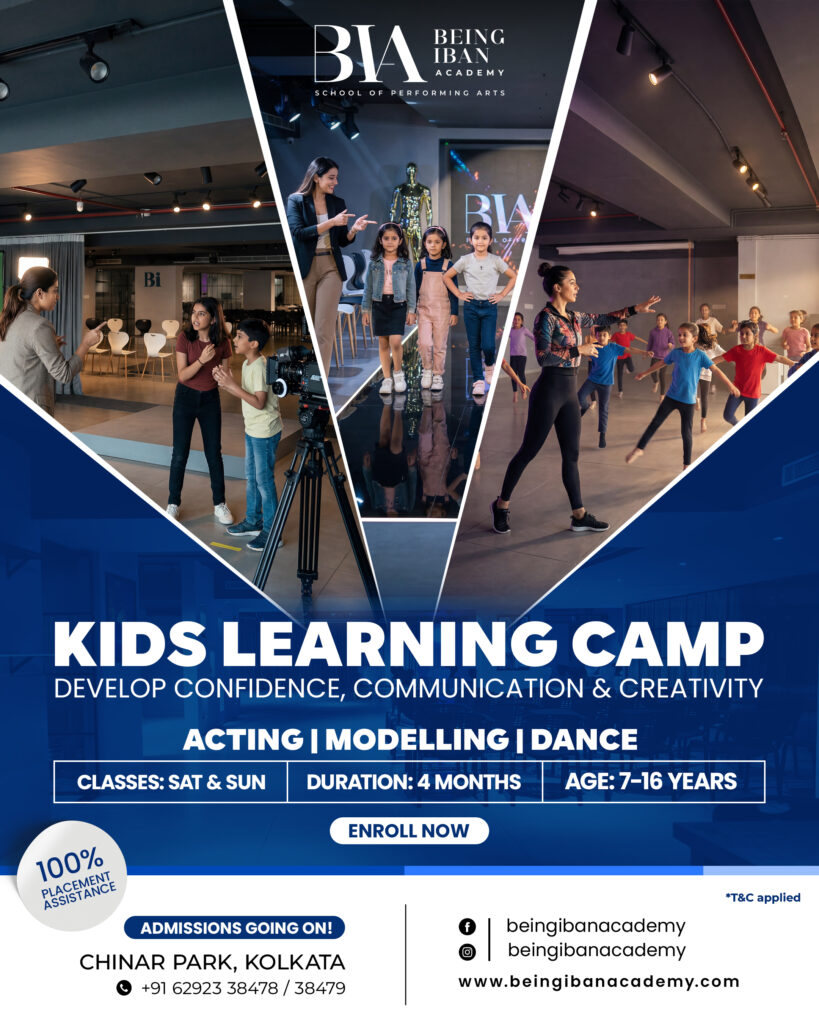
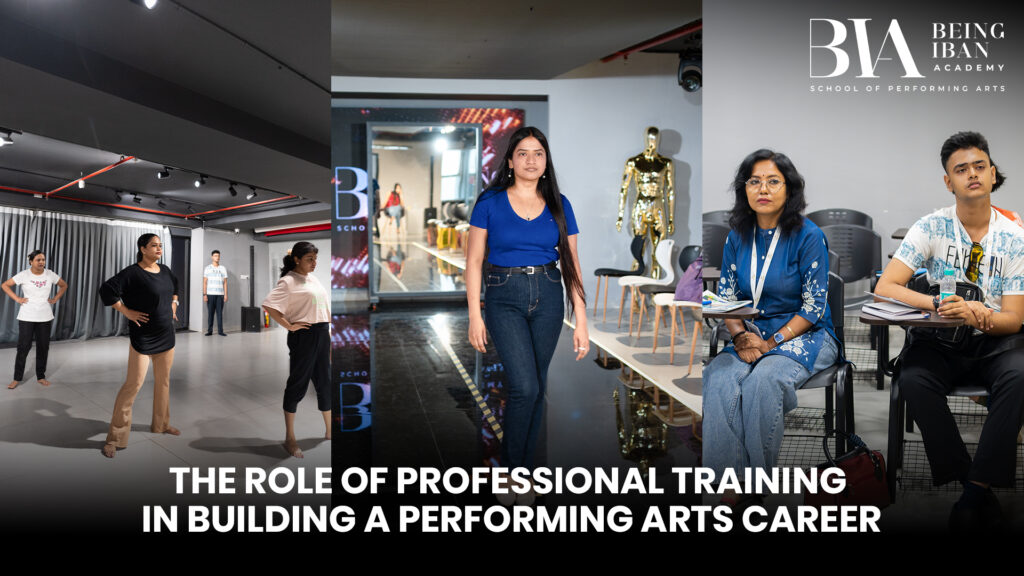
The Role of Professional Training in Building a Performing Arts Career also extends to practical exposure. Creative careers are highly experience-driven, and performers need opportunities to practise their skills in realistic situations. Audition exercises, stage performances, camera sessions, fashion shows, improvisation activities, and collaborative projects can help students become more comfortable with professional environments. At Being Iban Academy, practical learning allows students to apply techniques rather than limiting their development to theoretical knowledge.
Professional training also develops qualities that are essential beyond performance itself. Discipline, communication skills, teamwork, time management, confidence, adaptability, and personality development can influence how performers handle auditions, rehearsals, productions, and professional interactions. Working with experienced mentors and fellow learners can also teach performers how to accept feedback and continuously improve their craft.
Ultimately, The Role of Professional Training in Building a Performing Arts Career is about creating a strong foundation for long-term growth. Training does not replace natural creativity or individuality; instead, it helps performers understand how to use their abilities effectively. With consistent Professional Training, practical exposure, mentorship, and dedication, aspiring performers can become more confident and industry-ready. For those serious about building a career in the performing arts, investing in the right training can be the difference between simply having a passion and being prepared to pursue that passion professionally.