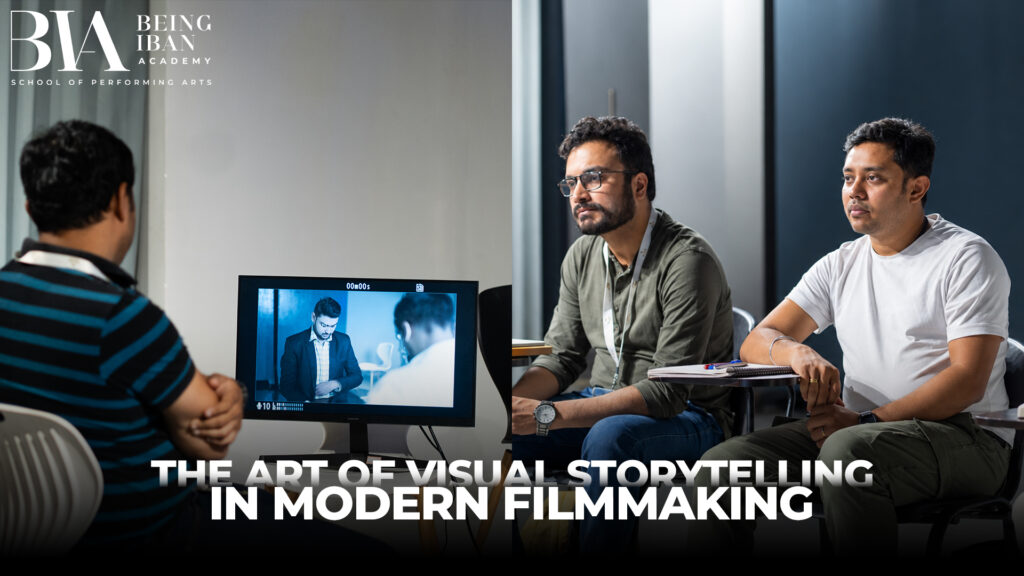
A great film does not rely only on dialogue to tell its story. The way a scene is framed, the movement of the camera, the use of light, colour, locations, costumes, and even silence can communicate emotions and ideas without a single word. This is the essence of The Art of Visual Storytelling in Modern Filmmaking. For aspiring filmmakers, learning how to communicate through images is an essential part of developing a strong cinematic language. A Filmmaking Course can help students understand how creative and technical decisions work together to transform a written idea into a compelling visual experience.
Visual storytelling begins with understanding what the audience needs to see and feel. Camera framing and composition can establish relationships, reveal important details, or create a particular emotional response. A close-up can highlight a character’s emotions, while a wide shot can establish the environment and make a character appear isolated or connected to their surroundings. Camera angles and movement can further influence how viewers perceive a scene. Learning these techniques allows filmmakers to make intentional choices rather than simply recording what happens in front of the camera.
Lighting and colour are equally important elements of The Art of Visual Storytelling in Modern Filmmaking. Bright, soft lighting can create a warm or uplifting atmosphere, while shadows and controlled lighting can introduce tension, mystery, or drama. Colour palettes can also influence the emotional tone of a film and help distinguish characters, locations, or different stages of a story. Through practical filmmaking exercises, aspiring filmmakers can experiment with lighting, composition, lenses, and camera movement to understand their visual impact.
Production design, costumes, props, and locations also contribute to visual storytelling. Every element within a frame can provide information about a character, setting, time period, or situation. Strong filmmakers learn to consider the entire frame rather than focusing only on the actors. At Being Iban Academy, practical learning can help aspiring filmmakers explore these creative elements while understanding how they contribute to a complete visual narrative.
Ultimately, The Art of Visual Storytelling in Modern Filmmaking is about making every visual choice meaningful. Editing then brings these individual images together, controlling rhythm, continuity, emotion, and narrative flow. A structured Filmmaking Course can introduce students to cinematography, direction, production design, editing, and other aspects of visual storytelling while giving them opportunities to apply these concepts practically. With creativity, observation, technical knowledge, and consistent practice, aspiring filmmakers can learn to tell powerful stories not just through what characters say, but through everything the audience sees.